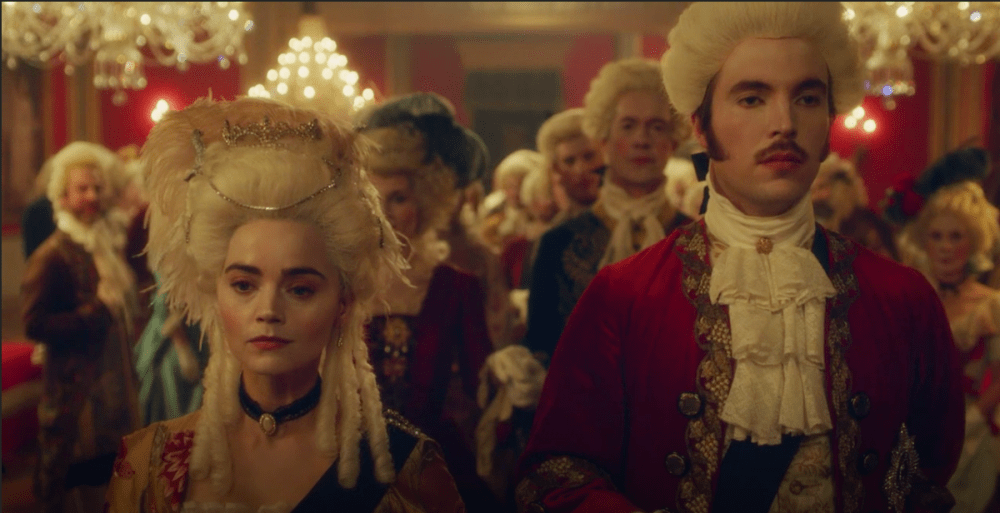
The sixth episode of Daisy Goodwin’s third series of Victoria depicted a nineteenth century costume ball. Queen Victoria, Prince Albert and their court donned the costumes of George II’s reign of a century before. Colourful costumes and white wigs flashed across our screens in a dramatic change of costume style from the usual nineteenth century fashionable dress inspirations.
This was not the first time that the series portrayed a fancy-dress ball, or bal costumé as Queen Victoria styled them. It was a token of each series as the cast ventured into Elizabethan dress for series 1, medieval for series two and now eighteenth-century. The series creator, Daisy Goodwin, uses these events as a plot device or as an opportunity to explore characterisation, tension, and conflict. However, these events, and the costumes worn at them, were a real fixture of upper-class nineteenth century society and they were much more than a plot device.
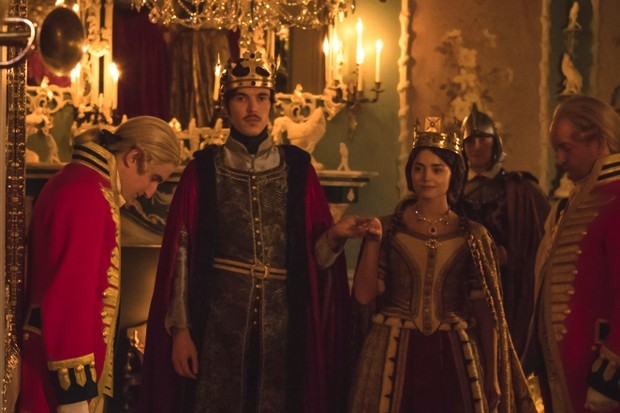

Fancy-Dress Balls
British fancy-dress balls originated in the late eighteenth century. They were an alternative costumed entertainment to the more popular masquerade ball. The key difference between these entertainments was the purpose and appearance of the costumes. At masquerade balls, participants dressed to disguise, conceal, and play with identity. Fancy dress costumes sought to highlight or compliment aspects of the wearer’s “true” identity.
As the times changed and new generations took to the ballrooms of London and countryside stately homes, the popularity of fancy-dress balls grew. British people increasingly turned to historically inspired art forms for their entertainment. Walter Scott’s historical novels were wildly popular and theatre costume designers began to place more importance on dress history research in their design process.
Soon, historically inspired costumes became the most popular choice for fancy dress ball goers. George IV helped bolster the vogue for historical style. He sought to outdo the Napoleon’s Charlemagne inspired coronation. So, he ordered that his own coronation, in the summer of 1821, have robes inspired by the Tudor courts of the sixteenth century.
It was with this precedent that Victoria and Albert organised their three costume balls at Buckingham Palace in 1842, 1845 and 1851.
The 1745 Ball, 6 June 1845
Victoria series three portrayed a ball inspired by Victoria’s second costume ball in 1845. The series presented the ball and their chosen drama between Victoria, Albert and the Queen’s sister Feodora within the short television time frame. What this brief depiction lacks, is a sense of not only the scale and significance of that event, but also the far-reaching interest from the British public.
Victoria’s eighteenth-century themed ball was held on 6 June 1845, but preparations began long before. The newspaper coverage of the event started over a month before with the announcement of the theme and proposed date. As early June drew nearer, the press coverage grew more extensive. Judgements were past on the appropriateness and aesthetic appearance of a ball with an eighteenth-century theme. Descriptions of costumes were printed before the event, and the great fashion house of London exhibited costumes they had made for the ball in their shop windows.
These costumes could only be worn by the wealthy upper classes, however there were opportunities for more ordinary Londoners to catch a glimpse of their spectacle.
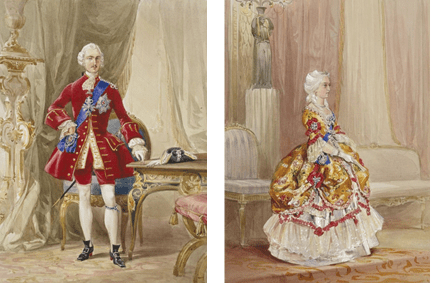
The night of the ball was more spectacular, and grand, than the television series could portray. Guests, numbering around 1500, arrived in carefully planned and constructed historical costumes. There was dancing inspired by the eighteenth century and progression of the Royal party through the state rooms of the palace.
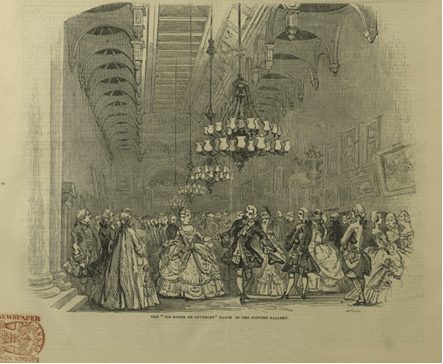
Victoria envisaged two direct purposes for her costume balls. Firstly, that they would be an opportunity to educate the court about the history of dress. Guests were strongly encouraged to attend as either an ancestor or their historical equivalent in the military or at the court. Costumes were expected to blend historical research and design inspiration with contemporary aesthetics. Victoria also encouraged her guests to commission their costumes from British manufactured materials to stimulate the British economy.
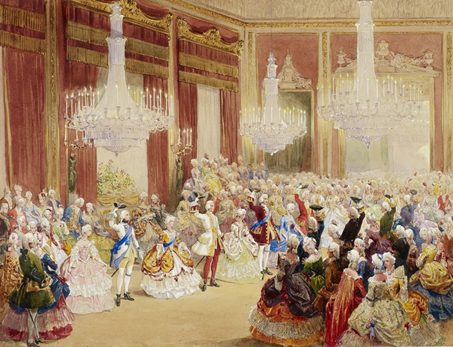
Victoria wanted the spectacle of her grand entertainment and costume captured in artworks. At least three artists were present either at the ball or in the days leading up to it, hired by the Queen to capture the costumes and the ballroom scenes for future display and for her private souvenir albums. The true splendour of the garments and scenes eluded even work produced by the greatest talents.
A sea of splendid brocade skirts and velvet frock coats would have sparkled as the candlelight caught the diamonds and other precious stones. Many of the ladies’ dresses had been carefully decorated with diamonds by the fashion house seamstresses and embroiderers. On top of that, they wore necklaces, earrings and hair jewels only adding to the shining spectacle.
Yet just to be invited and stand in the ballroom, dripping in diamonds, was not the end of the story for these costumes and their wearers.
Passing Judgement
Once at the ball, the participants carefully scrutinised the success of their fellow guests’ outfits. Was the costume researched enough? Was it becoming? Did it suit their appearance and personality? Who looked best? Who looked worst? Victoria herself, recorded her conclusions to these questions in her journal and she was not afraid to express her distaste for incorrect costumes, even when describing the costume of her aunt, the Duchess of Gloucester.
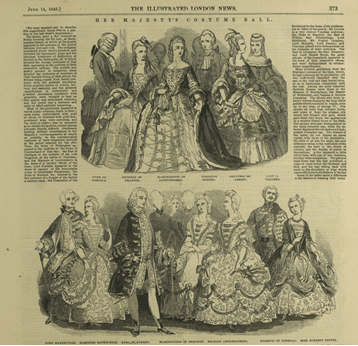
This judging process did not stop when the guests departed the ballroom in the early hours of the morning. Just days later, and for weeks after, it continued in Britain’s newspapers and fashion magazines. Newspapers published pages and pages of costume descriptions and in some cases illustrations. They also provided their own assessment of which guests had most successfully carried off their ensembles. The descriptions and illustrations allowed the newspapers’ readership to come to their own conclusions about which costumes were most correct.
These balls and their costumes were more than a plot device or an entertaining interlude for a television drama. They were spectacular, large scale entertainments with considerable preparations and a significant afterlife.
The costumes were objects of personal significance to their wearers but had broader uses and functions within British nineteenth century society. They gave work to British manufacturing and were a visual spectacle from fashion house windows to the eyes of Londoners.
Moreover, these balls provided the arena for a hotly contested fashionable and aesthetic contest. Its judges were those present at the ball, and the British public more broadly – through shop windows and print media. The contest was fought through costume, and only the most recherché, charming, and becoming habits could prevail.
 Sarah J. Hodge
Leave a comment