Previously: We established that Dorothea von Lieven wore a form of historicised fancy-dress to a ball given in honour of Queen Charlotte at Carlton House in February 1813.
For this, the final instalment in my first trilogy of blog posts, we will take a deep dive into the visual world of sartorial historicism in early nineteenth-century dress. Historical themes and design inspirations from the early modern period were common place in British women’s dress in 1813. These styles were inspired by a variety of eighteenth- and nineteenth-century trends such as: history painting, theatre, the French style troubadour, popular masquerade dress styles of the eighteenth century etc….
The description of Dorothea’s dress from both Lady Elizabeth Fielding and The Morning Post, described fancy-dress in a sixteenth-century style (reminiscent of Queen Elizabeth I, but more likely Mary, Queen of Scots). These early modern queens were popular sources of inspiration, so the Russian Ambassadress was certainly not making a controversial character choice. Wearing Mary Stuart fancy-dress, or fashionable styles referencing her, could allow women to highlight and signal aspects of their characters (but we can get into all of that identity and symbolism in a future blog post).
For now, let’s focus on establishing a visual sense of what Dorothea’s dress might have looked like. Very few fancy-dress costumes from the early nineteenth century survive and dress historians are often left with written descriptions alone. A broader knowledge of historical fashionable trends from the early nineteenth-century can help to establish a rough visual picture to associate with these fascinating descriptions. It is these visual associations which I would like to try to outline for you.
Breaking down the descriptions which I discussed in Part I & II, we will examine her:
Black Velvet with Gold Decoration:
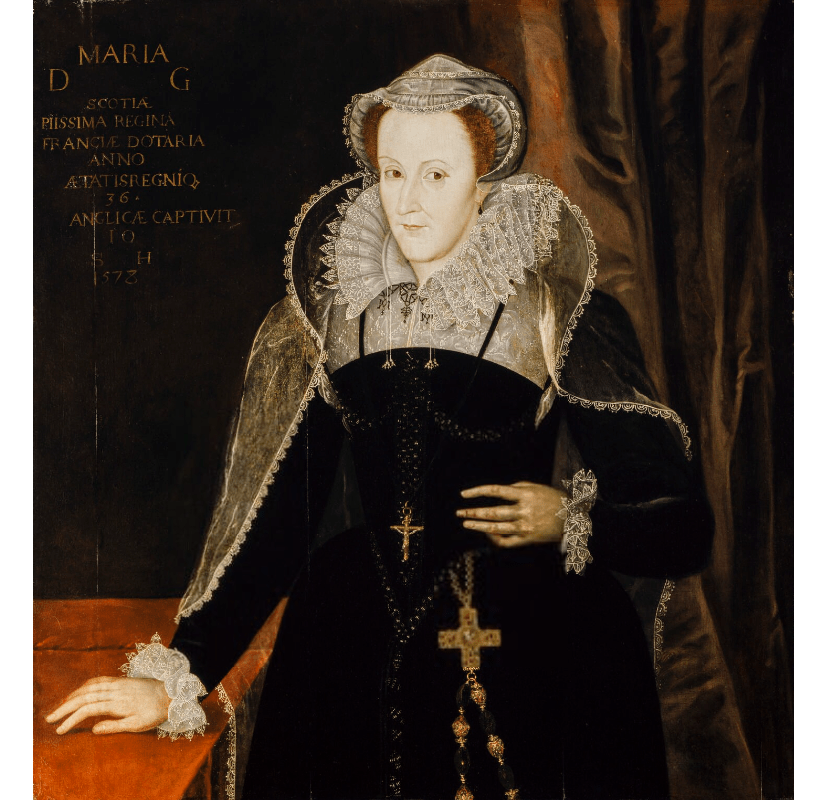
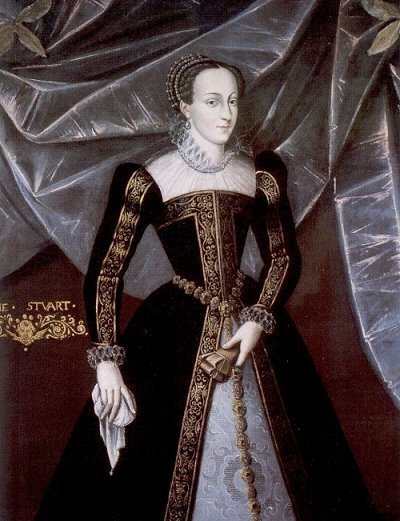
The choice of black velvet makes sense from both the appearance it would have given the gown and the colour reference to well known Mary Queen of Scots portraits. History painting became popular, and Mary was a popular subject in eighteenth and nineteenth-century paintings, where she is often also depicted wearing black.

Huge Ruff
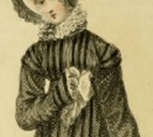
Ruffs were worn during the sixteenth century, and Mary was often painted wearing quite large ruffs. It was a very popular clothing accessory during the early nineteenth century. A versatile and adaptable clothing piece, it was worn for carriage, morning, promenade and evening full-dress. Some ladies magazines also described particular ruff designs as being “à la Mary Queen of Scots”. The Mary Stuart ruffs were sometimes open in the front like in the fashion plate below from 1812. Dorothea’s fancy-dress costume probably featured a ruff more in the style of the below 1822 fashion plate. Since her dress was to her throat (and very large) that would make the most sense.
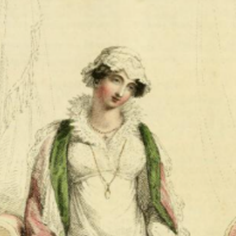
Ruff à la Mary Queen of Scots, 1812
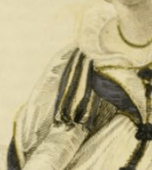
Sleeves (Epaulet)
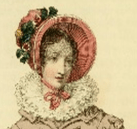
The sleeves aren’t described in great detail. But since an epaulet is mentioned, it may have had a shoulder design similar to the 1820 fashion plate below. This is vaguely reminiscent of some of the sleeve and shoulder designs represented in sixteenth-century portraiture. Mary is also often represented with slashed or Spanish sleeves, so it is likely this would have featured in her outfit.
Girdle Chain
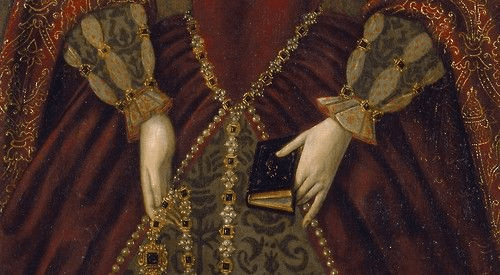
Her diamond girdle chain is a clear reference to the sixteenth century, and one of the more easy to visually represent. Some fashion plates depict a skirt design reminiscent of a gridle chain, but it is sewn to the skirt. As the description specifically said a girdle chain, and it was a fancy-dress costume, I think that she probably wore something more in the style of the below cropped portrait.
Overall Outfits
The sixteenth century was frequently represented in early nineteenth-century fashion plates. The earlier issues of Ackermann’s Repository, had quite a few full-dress plates which give an idea of the sort of style that an overall look of this type might have taken around 1813.


So What Then?
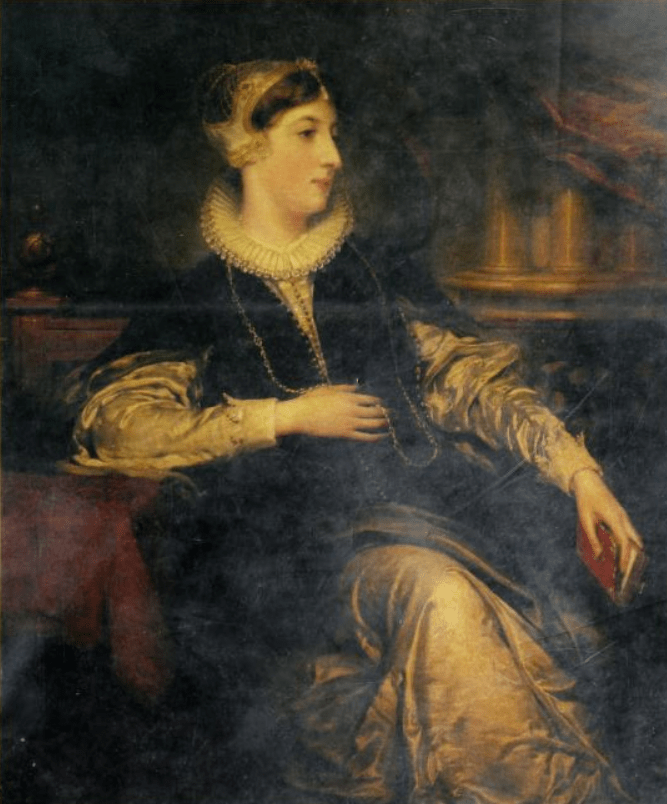
Unfortunately, to my knowledge, no visual representations of Dorothea in Mary Stuart costume exist. Despite that, I do hope that this post has helped to shed some light on what a dress in this style might have looked like in 1813. Each historical period has their own visual culture and idea about the past. Dorothea’s costume would have been a combination of ideas about the past, stemming from herself and her society, in tandem with fashionable dress tastes and conventions of 1813. To conclude this slightly different, more visual post, I have included a picture of an aristocratic lady, painted in dress reminiscent of Mary Queen of Scots style.
Mary Queen of Scots, appealed to women as a historical figure in the eighteenth and nineteenth century. She was one of their “poor unfortunates” a group of female historical figures who lived tragic and dramatic lives. They made for great drama in a painting, and allowed strong and symbolic expressions of identity through fashion and fancy-dress. Mary Stuart, Jane Grey, Anne Boleyn and many more, were great sources of stylistic inspiration.
I hope that this series of three posts has introduced the varied and intriguing nature of historically inspired dress during the eighteenth and nineteenth centuries. My research centres around understanding this dress form, but also investigating how women used fancy and fashionable dress to express themselves and visually communicate.
Stay tuned for more fanciful fashions…
 Sarah J. Hodge
Leave a comment